
Ebook Free Mister Seahorse: board book (World of Eric Carle), by Eric Carle
Are you seeking Mister Seahorse: Board Book (World Of Eric Carle), By Eric Carle that comes to be an analysis resource quickly? Now we invite! We provide guide that you truly need now. This book is precisely produced for motivating many people who read it. If you actually need to obtain guide sooner, you are in the appropriate speed. This site will not just provide guide in soft data system straight. Yet, you could likewise take it directly and also rapidly without investing some days to wait for or waiting for the moments you have free time.
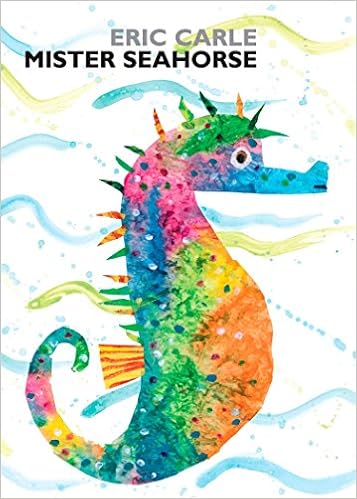
Mister Seahorse: board book (World of Eric Carle), by Eric Carle

Ebook Free Mister Seahorse: board book (World of Eric Carle), by Eric Carle
Mister Seahorse: Board Book (World Of Eric Carle), By Eric Carle. A job may obligate you to consistently improve the expertise as well as encounter. When you have no enough time to enhance it straight, you could get the experience as well as understanding from reviewing guide. As everyone understands, publication Mister Seahorse: Board Book (World Of Eric Carle), By Eric Carle is popular as the window to open the world. It means that reading publication Mister Seahorse: Board Book (World Of Eric Carle), By Eric Carle will give you a new means to find everything that you need. As the book that we will supply below, Mister Seahorse: Board Book (World Of Eric Carle), By Eric Carle
This publication includes the distinctive taste of the book created. The specialist writer of this Mister Seahorse: Board Book (World Of Eric Carle), By Eric Carle has frequently makes an excellent publication. However, that's not just around excellent publication. This is also the condition in which guide provides extremely intriguing products to conquer. When you actually want to see exactly how this book is given and also provided, you can sign up with extra with us. We will certainly offer you the web link of this book soft data.
Reviewing will not only satisfy your time openly. It will certainly offer the means as well as several things that can be done when analysis. Obtaining the facts, entertainment, lesson, and also expertise can be gotten to easier by checking out guide. You could not only have to save you time for your friend or family. Sometimes, spending few times for analysis will be likewise precious.
To get what you truly wish to make, reading this book can be accomplished whenever you have opportunity to check out. Yeah, reading is a needs to from everybody, not just when you are being in the college. Reviewing will certainly make you better as well as much better in expertise and also lessons. Many experiences can be additionally acquired from reviewing only. So, be wise to obtain all those gain from Mister Seahorse: Board Book (World Of Eric Carle), By Eric Carle to read as well as end up.
Review
"In his elegant painted tissue-paper collages, Carle innovatively balances pastel hues with shocks of brilliant color, creating an appealing seascape that succeeds swimmingly." (Publishers Weekly, starred review)"In his elegant painted tissue-paper collages, Carle innovatively balances pastel hues with shocks of brilliant color, creating an appealing seascape that succeeds swimmingly." (Publishers Weekly, starred review)
Read more
About the Author
Eric Carle is acclaimed and beloved as the creator of brilliantly illustrated and innovatively designed picture books for very young children. His best-known work, The Very Hungry Caterpillar, has eaten its way into the hearts of literally millions of children all over the world and has been translated into more than 25 languages and sold over twelve million copies. Since the Caterpillar was published in 1969, Eric Carle has illustrated more than sixty books, many best sellers, most of which he also wrote. Born in Syracuse, New York, in 1929, Eric Carle moved with his parents to Germany when he was six years old; he was educated there, and graduated from the prestigious art school, the Akademie der bildenden Kunste, in Stuttgart. But his dream was always to return to America, the land of his happiest childhood memories. So, in 1952, with a fine portfolio in hand and forty dollars in his pocket, he arrived in New York. Soon he found a job as a graphic designer in the promotion department of The New York Times. Later, he was the art director of an advertising agency for many years. One day, respected educator and author, Bill Martin Jr, called to ask Carle to illustrate a story he had written. Martin's eye had been caught by a striking picture of a red lobster that Carle had created for an advertisement. Brown Bear, Brown Bear, What Do You See? was the result of their collaboration. It is still a favorite with children everywhere. This was the beginning of Eric Carle's true career. Soon Carle was writing his own stories, too. His first wholly original book was 1,2,3 to the Zoo, followed soon afterward by the celebrated classic, The Very Hungry Caterpillar. Eric Carle's art is distinctive and instantly recognizable. His art work is created in collage technique, using hand-painted papers, which he cuts and layers to form bright and cheerful images. Many of his books have an added dimension - die-cut pages, twinkling lights as in The Very Lonely Firefly, even the lifelike sound of a cricket's song as in The Very Quiet Cricket - giving them a playful quality: a toy that can be read, a book that can be touched. Children also enjoy working in collage and many send him pictures they have made themselves, inspired by his illustrations. He receives hundreds of letters each week from his young admirers. The secret of Eric Carle's books' appeal lies in his intuitive understanding of and respect for children, who sense in him instinctively someone who shares their most cherished thoughts and emotions.The themes of his stories are usually drawn from his extensive knowledge and love of nature - an interest shared by most small children. Besides being beautiful and entertaining, his books always offer the child the opportunity to learn something about the world around them. It is his concern for children, for their feelings and their inquisitiveness, for their creativity and their intellectual growth that, in addition to his beautiful artwork, makes the reading of his books such a stimulating and lasting experience.Carle says: "With many of my books I attempt to bridge the gap between the home and school. To me home represents, or should represent; warmth, security, toys, holding hands, being held. School is a strange and new place for a child. Will it be a happy place? There are new people, a teacher, classmates - will they be friendly? I believe the passage from home to school is the second biggest trauma of childhood; the first is, of course, being born. Indeed, in both cases we leave a place of warmth and protection for one that is unknown. The unknown often brings fear with it. In my books I try to counteract this fear, to replace it with a positive message. I believe that children are naturally creative and eager to learn. I want to show them that learning is really both fascinating and fun."Eric Carle has two grown-up children, a son and a daughter. With his wife Barbara, he lives in Northampton, Massachusetts. The Carles spend their summers in the nearby Berkshire hills.copyright © 2000 by Penguin Group (USA) Books for Young Readers. All rights reserved.Eric Carle is acclaimed and beloved as the creator of brilliantly illustrated and innovatively designed picture books for very young children. His best-known work, The Very Hungry Caterpillar, has eaten its way into the hearts of literally millions of children all over the world and has been translated into more than 25 languages and sold over twelve million copies. Since the Caterpillar was published in 1969, Eric Carle has illustrated more than sixty books, many best sellers, most of which he also wrote. Born in Syracuse, New York, in 1929, Eric Carle moved with his parents to Germany when he was six years old; he was educated there, and graduated from the prestigious art school, the Akademie der bildenden Kunste, in Stuttgart. But his dream was always to return to America, the land of his happiest childhood memories. So, in 1952, with a fine portfolio in hand and forty dollars in his pocket, he arrived in New York. Soon he found a job as a graphic designer in the promotion department of The New York Times. Later, he was the art director of an advertising agency for many years. One day, respected educator and author, Bill Martin Jr, called to ask Carle to illustrate a story he had written. Martin's eye had been caught by a striking picture of a red lobster that Carle had created for an advertisement. Brown Bear, Brown Bear, What Do You See? was the result of their collaboration. It is still a favorite with children everywhere. This was the beginning of Eric Carle's true career. Soon Carle was writing his own stories, too. His first wholly original book was 1,2,3 to the Zoo, followed soon afterward by the celebrated classic, The Very Hungry Caterpillar. Eric Carle's art is distinctive and instantly recognizable. His art work is created in collage technique, using hand-painted papers, which he cuts and layers to form bright and cheerful images. Many of his books have an added dimension - die-cut pages, twinkling lights as in The Very Lonely Firefly, even the lifelike sound of a cricket's song as in The Very Quiet Cricket - giving them a playful quality: a toy that can be read, a book that can be touched. Children also enjoy working in collage and many send him pictures they have made themselves, inspired by his illustrations. He receives hundreds of letters each week from his young admirers. The secret of Eric Carle's books' appeal lies in his intuitive understanding of and respect for children, who sense in him instinctively someone who shares their most cherished thoughts and emotions.The themes of his stories are usually drawn from his extensive knowledge and love of nature - an interest shared by most small children. Besides being beautiful and entertaining, his books always offer the child the opportunity to learn something about the world around them. It is his concern for children, for their feelings and their inquisitiveness, for their creativity and their intellectual growth that, in addition to his beautiful artwork, makes the reading of his books such a stimulating and lasting experience.Carle says: "With many of my books I attempt to bridge the gap between the home and school. To me home represents, or should represent; warmth, security, toys, holding hands, being held. School is a strange and new place for a child. Will it be a happy place? There are new people, a teacher, classmates - will they be friendly? I believe the passage from home to school is the second biggest trauma of childhood; the first is, of course, being born. Indeed, in both cases we leave a place of warmth and protection for one that is unknown. The unknown often brings fear with it. In my books I try to counteract this fear, to replace it with a positive message. I believe that children are naturally creative and eager to learn. I want to show them that learning is really both fascinating and fun."Eric Carle has two grown-up children, a son and a daughter. With his wife Barbara, he lives in Northampton, Massachusetts. The Carles spend their summers in the nearby Berkshire hills.copyright © 2000 by Penguin Group (USA) Books for Young Readers. All rights reserved.
Read more
Product details
Grade Level: Preschool and up
Lexile Measure: AD470L (What's this?)
amznJQ.available('jQuery', function() {
amznJQ.available('popover', function() {
jQuery("#lexileWhatsThis_db").amazonPopoverTrigger({
showOnHover: true,
showCloseButton: false,
title: 'What is a Lexile measure?',
width: 480,
literalContent: 'A Lexile® measure represents either an individual's reading ability (a Lexile reader measure) or the complexity of a text (a Lexile text measure). Lexile measures range from below 200L for early readers and text to above 1600L for advanced readers and materials. When used together Lexile measure help a reader find books at an appropriate level of challenge, and determine how well that reader will likely comprehend a text. When a Lexile text measure matches a Lexile reader measure, this is called a "targeted" reading experience. The reader will likely encounter some level of difficulty with the text, but not enough to get frustrated. This is the best way to grow as a reader - with text that's not too hard but not too easy.',
openEventInclude: "CLICK_TRIGGER"
});
});
});
Series: World of Eric Carle
Board book: 64 pages
Publisher: Philomel Books; Brdbk edition (March 3, 2011)
Language: English
ISBN-10: 0399254900
ISBN-13: 978-0399254901
Product Dimensions:
5.1 x 1 x 7 inches
Shipping Weight: 9.6 ounces (View shipping rates and policies)
Average Customer Review:
4.0 out of 5 stars
376 customer reviews
Amazon Best Sellers Rank:
#14,404 in Books (See Top 100 in Books)
While yes, the book does get repetitive, the overall theme is about fathers taking care of their young, so that's nice. I'm writing this review mostly because I have the hardcover and was very curious to see how the clear pages translated into a board book, and I wasn't disappointed! I think the execution is adorable! The clear portions are safely surrounded by cardboard to hopefully preserve them. See my pictures so you have an idea of how they did it. Cute book!
This book is incredibly small! I buy a lot of books and certainly wasn't expecting it to be a miniature! My fault...I should have read the details closer...but when I buy a hardcover book like this, I assume it's a normal size...very disappointed! I bought this to read to a group of children...not possible. If you are looking for a tiny...tiny book...then fine. If you want something readable...make another choice.
We love Eric Carle's books very much! After visiting an aquarium on our vacation, we decided to buy a few ocean-related books, including this one. The illustrations are, as always very beautiful and catchy. The clear plastic pages through which you can partially see the next page are quite unique. They definitely keep the interest of a young child throughout the book. However, the story lacks development. Mr. Seahorse just swims along and meets other daddies who take care of the unhatched eggs. We still gave the book four starts because the illustrations are fantastic and the premise of the book is cool - dads are not just by-standers in child rearing.
Sometimes there is a daddy who has to go beyond a traditional loving role, or beyond a modern loving sharing role, and do most of the parenting alone for any of a number of reasons. Without spelling any of that out for a sweet little kid, I wanted to give some recognition to that special kind of dad, and to give the gift of a good enjoyable 'together read' to that dad and his child. This book did it. I find this book to be a tribute to that kind of a daddy, and the book itself, a joy for daddy and child to cuddle up with to read together. This is a board book, with the lovely, colorful illustrations one expects from Eric Carle, with overlays to make for a special bit of excitement as new discoveries are made. It is of a size easy to handle with a child cuddled close, and for a child to later enjoy on their own. Additionally, it is educational as it introduces other sea creature dads.
Absolutely beautiful artwork from Eric Carle, but aside from The Hungry Caterpillar, not a fan of his writing, which I find clunky. Mister Seahorse was not a smooth read to me - I don't quite understand the role of the fish behind the Mylar panels and "but before long Mister Seahorse saw another fish" when he'd just seen another fish. My toddler loved the pictures, but didn't care for the words either - at times he wanted me to not read aloud, whereas he wants me to read from his other books.
You gotta hand it to Eric Carle for still putting together great visuals and cute stories like this. I never heard of Mister Seahorse until a few months ago, and figured it was one of his books I missed out on when I was a kid. Nope, 'turns out it was released in 2004, but it sure fits in with his other greats like The Very Hungry Caterpillar and The Very Quiet Cricket. And just like those books, it sports a unique feature with how the pages are done here and there.Mister Seahorse takes care of Mrs. Seahorse's eggs one day, and carries them in a pouch on his stomach. He goes around the ocean, and encounters a few other fish that also happen to be dads that are taking care of their eggs too. Between encounters, Mister Seahorse will see different creatures hiding behind rocks, seaweed and other objects, introducing the reader to new kinds of marine life. The final pages have the babies hatching from their eggs in Mister Seahorse's tummy, and they all leave him, ready to go out into the world on their own. One seahorse tries to go back, but, lovingly, Mister Seahorse tells it that while he does love the baby, it needs to go on without him.This book has the usual colorful Eric Carle artwork with tissue paper, and it looks beautiful. Every book I see by him, it's like his work just gets better and better. And you gotta love the use of transparent sheets to hide some of the fish every couple of pages. One page will say that Mister Seahorse sees something, then the next page is covered by a transparent plastic sheet with something to hide the fish on the page beneath it. Like a big brown rock concealing a big brown fish. When you turn the page, Mister Seahorse is covered by the object, and it still looks good. Kids will love this feature, and my daughter is always eager to turn the clear pages herself.The only negative thing I can point out is that the book is repetitive with the plot- Mister Seahorse encounters another father fish, tells it that it's doing a good job, bumps into hidden creatures, repeat a few times, but it's been said that children love repetition, so I can't dock points for that. The story is still cute, and the artwork is eye candy galore. Plus this is one of the few kid's books I've seen around that focuses on the dad taking care of his children, and it's good that good ol' Eric did a story with this theme. 5 stars for great art, great use of clear pages, and for being my daughter's second book that she's memorized (the other being Where the Wild Things Are of course).
This is my second review on a Carle board book. These were great little books that I purchased my own child when she was much younger years ago. Now I purchase these little board books for all of my friends' babies. They are great!
The book is beautiful but the end of the story is disappointing and upset my 4 year old grandson. Mr. seahorse releases the babies but when one of them tries to return to him he tells the baby it can't come back. I am going to change the ending when I read it. My question is why did Eric Carle end the story on such a unnurturing note? Tough love is hard to understand for a young child.
Mister Seahorse: board book (World of Eric Carle), by Eric Carle PDF
Mister Seahorse: board book (World of Eric Carle), by Eric Carle EPub
Mister Seahorse: board book (World of Eric Carle), by Eric Carle Doc
Mister Seahorse: board book (World of Eric Carle), by Eric Carle iBooks
Mister Seahorse: board book (World of Eric Carle), by Eric Carle rtf
Mister Seahorse: board book (World of Eric Carle), by Eric Carle Mobipocket
Mister Seahorse: board book (World of Eric Carle), by Eric Carle Kindle